|
North Carolina’s Research Triangle Region is one of the fastest-growing and most dynamic metropolitan areas in the southeastern United States.
Anchored by the state capital Raleigh, the region blends Southern charm, cutting-edge innovation, and a high quality of life.
It includes Wake County and surrounding communities like Cary, Apex, Garner, and parts of Durham and Chapel Hill.
|
|
|
Urban & Suburban Composition
|
|
|
• |
Raleigh: Known as the “City of Oaks,” it’s the state capital and cultural heart, offering a mix of historic neighborhoods, a revitalized downtown, and thriving business districts.
|
|
• |
Cary: A fast-growing, affluent suburb popular with families and professionals.
|
|
• |
Apex, Holly Springs, and Wake Forest: Suburbs with strong schools, new housing, and access to green space.
|
|
• |
Part of the broader Research Triangle, which includes Durham (home to Duke University) and Chapel Hill (home to UNC-Chapel Hill).
|
|
|
|
Research & Education Hub
|
|
|
• |
The region is built around three Tier 1 research universities:
| • |
North Carolina State University (NCSU) in Raleigh
|
| • |
Duke University in Durham
|
| • |
University of North Carolina at Chapel Hill (UNC)
|
|
|
• |
Home to Research Triangle Park (RTP)—one of the largest and most prestigious research parks in the U.S.—a major center for tech, biotech, and pharmaceutical R&D.
|
|
|
|
Economy & Innovation
|
|
|
• |
Key industries:
| • |
Technology and software development
|
| • |
Biotech, pharmaceuticals, and life sciences
|
| • |
Financial services
|
| • |
Advanced manufacturing
|
|
|
• |
Major employers include IBM, Cisco, Red Hat (now part of IBM), Epic Games, GlaxoSmithKline, and RTI International.
|
|
• |
A strong startup and innovation ecosystem, bolstered by university partnerships and venture capital investment.
|
|
|
|
Quality of Life & Livability
|
|
|
• |
Frequently ranked among the best places to live in the U.S. for affordability, education, healthcare, and family life.
|
|
• |
Mix of urban convenience and natural beauty—with greenways, lakes, and access to the Blue Ridge Mountains and Atlantic beaches.
|
|
• |
Moderate cost of living compared to national tech hubs, with access to modern housing, good schools, and low crime rates.
|
|
|
|
Culture & Lifestyle
|
|
|
• |
A growing arts and food scene in Downtown Raleigh, with museums (like the NC Museum of Art), galleries, music venues, and breweries.
|
|
• |
Strong local identity supported by events like Hopscotch Music Festival, Dreamville Festival, and Artplosure.
|
|
• |
Proximity to college sports, ACC basketball, and NHL hockey (Carolina Hurricanes) adds to the regional spirit.
|
|
|
|
Transportation & Access
|
|
|
• |
Raleigh-Durham International Airport (RDU) offers direct flights across the U.S. and to international destinations.
|
|
• |
Expanding public transit through GoTriangle and GoRaleigh, though most residents rely on cars.
|
|
• |
Central East Coast location provides easy highway access to Washington, D.C., Atlanta, and the Carolinas’ coastlines.
|
|
|
|
|
|
Contact Information
|
|
Phone: +1 919.400.6767
Email: raleigh@pts-moves.com
|
|
|
|
|
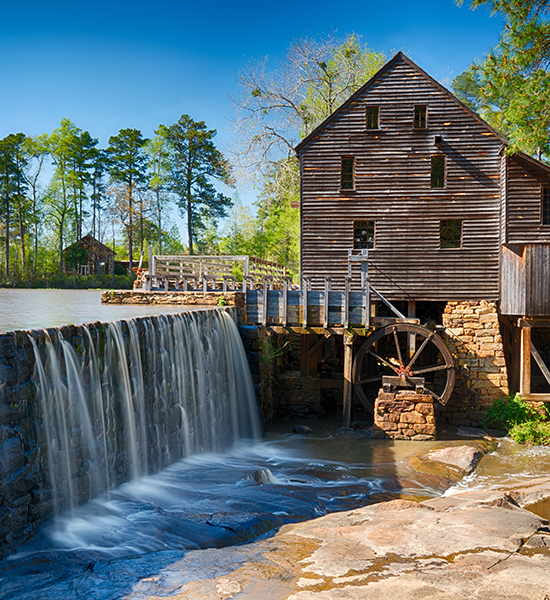
Historic Yates Water Mill, Raleigh, North Carolina, United States
|
|
|

 Raleigh, North Carolina, United States